

Try a mission →
Plain-English AI · Australia & Asia-Pacific

AI works best
with your judgement.

Real, everyday ways to team up with AI at home, at work and in your community. It drafts, suggests and explains; you check, decide and stay in charge. Free for everyone, in plain English, with no sign-up needed.

Australian coastline at first light
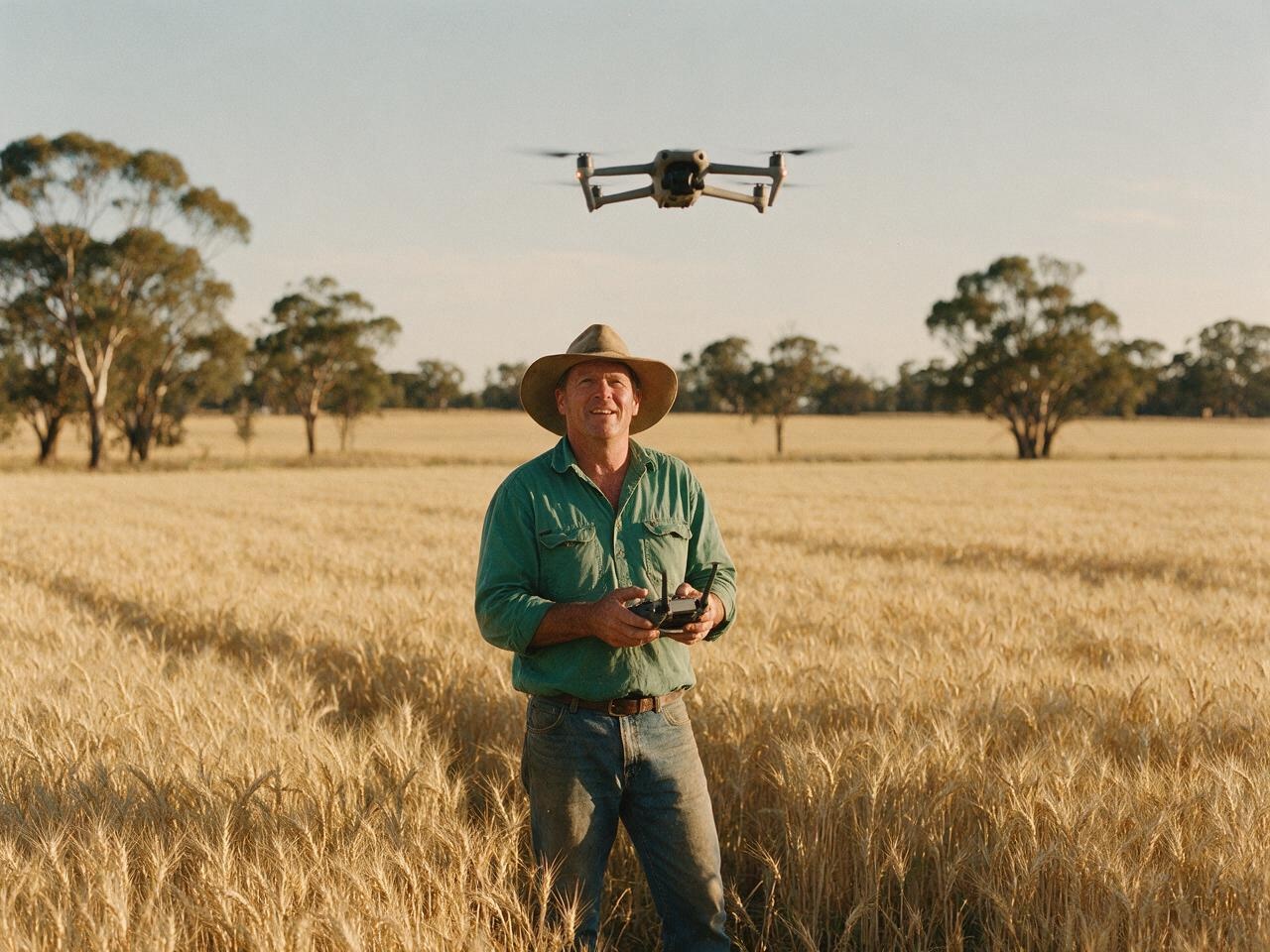
Farmer using a drone in a wheat field
Students learning in a regional classroom
Try something useful

What could AI help you do?

Six starter prompts. Copy one into a tool you’re allowed to use, fill in the brackets with public or made-up details, and judge the result yourself. The cursor has been blinking long enough.

01

Get started

Turn a blank page into an outline you can improve.

Try this prompt

I need to explain [topic] to [audience]. Ask me three clarifying questions, then suggest a simple outline. Flag anything that needs a source; do not invent facts.

Your check: Does the outline serve your audience and purpose? Check any facts before using them.
Build a clearer brief →
02

Explore possibilities

Find several ways forward before choosing one.

Try this prompt

Here is a problem I’m working on: [problem]. Suggest five approaches: practical, low-cost, ambitious, unconventional and something we could test this week. State assumptions, trade-offs and what needs checking.

Your check: Choose what fits your constraints. A suggestion is not proof that something will work.

Write a welcoming invitation →
03

Learn something new

Get an explanation, then test your own understanding.

Try this prompt

Explain [topic] using a simple everyday example. Separate established facts from simplifications. Ask me one question at a time, and let me answer before giving feedback.

Your check: Explain it in your own words and compare it with a reliable source. AI feedback can be wrong too.

Try a learning mission →
04

Challenge your thinking

Find assumptions and counterarguments—not just agreement.

Try this prompt

Here is my plan: [plan]. What assumptions am I making? Give the strongest counterargument, the main risks and one inexpensive way to test it. Do not simply agree with me.

Your check: Judge the objections on evidence. A confident counterargument can also be mistaken.

Practise checking an answer →
05

Make yourself clearer

Improve a message without losing your voice.

Try this prompt

Make this message clearer and shorter: [message]. Keep my tone, preserve the meaning and conditions, do not add facts, and flag anything ambiguous.

Your check: Compare the original and revision. Did any promise, condition or meaning change?

Spot a changed promise →
06

Practise a conversation

Rehearse a presentation or customer discussion before the real thing.

Try this prompt

Role-play a sceptical customer hearing this proposal: [proposal]. Ask one realistic question at a time. Afterwards, give constructive feedback on clarity and listening. Do not claim to predict a real person's response.

Your check: Use the rehearsal to prepare, not to assume how someone will respond. Keep real customer details out.

See a practice-conversation example →
Which AI tool can I use?

At work or school, use a tool allowed by your organisation and follow its data rules. For personal use, check the tool’s age rules, privacy settings and how it uses or keeps your inputs. Settings alone do not guarantee privacy: keep personal, confidential and culturally restricted information out of these practice tasks.

You don’t need an AI account for anything on this site. Children should explore with a trusted adult.

No AI account? Every card links to a mission or worksheet you can do with a pen.

The habit behind everything here

Delegate the draft. Keep the judgement.

  1. 01

    Think

    What are you trying to achieve? Form your own starting view before asking AI.

    Before you paste →
  2. 02

    Collaborate

    Explain what you need. Ask for different ideas and reasons your first plan might not work.

    Get a better answer →
  3. 03

    Check

    Check important details against the original information or a reliable source. A polished answer can still be wrong.

    How much to check →
  4. 04

    Decide

    Use your experience and values to make the final call. Choosing not to use AI is an option too.

    Did it save time? →

AI can make mistakes. Check more carefully when the consequences matter, and keep sensitive information out of practice tasks.

Understand

AI in plain English

You don’t need a computer-science degree to have a view on AI. Start with these three ideas.

Jargon getting in the way? The plain-English glossary →

Idea 1

It generates. It can be wrong.

Generative AI learns patterns from data to produce text, images and other outputs. Fluency is not proof: verify important claims against sources you trust.

Idea 2

It’s already in your day.

Your bank’s fraud alerts, your phone’s camera, the feed you scroll, the call-centre voice. AI is less a future thing than a present one.

Idea 3

People decide how it’s used.

Every AI system reflects choices about data, design and deployment. Those choices can be questioned, and changed.

The upside

Where AI could help, and what it would take.

AI may help us learn, create and use resources better. Whether it does depends on how it is built, used and checked, and on who gets to share the benefits.

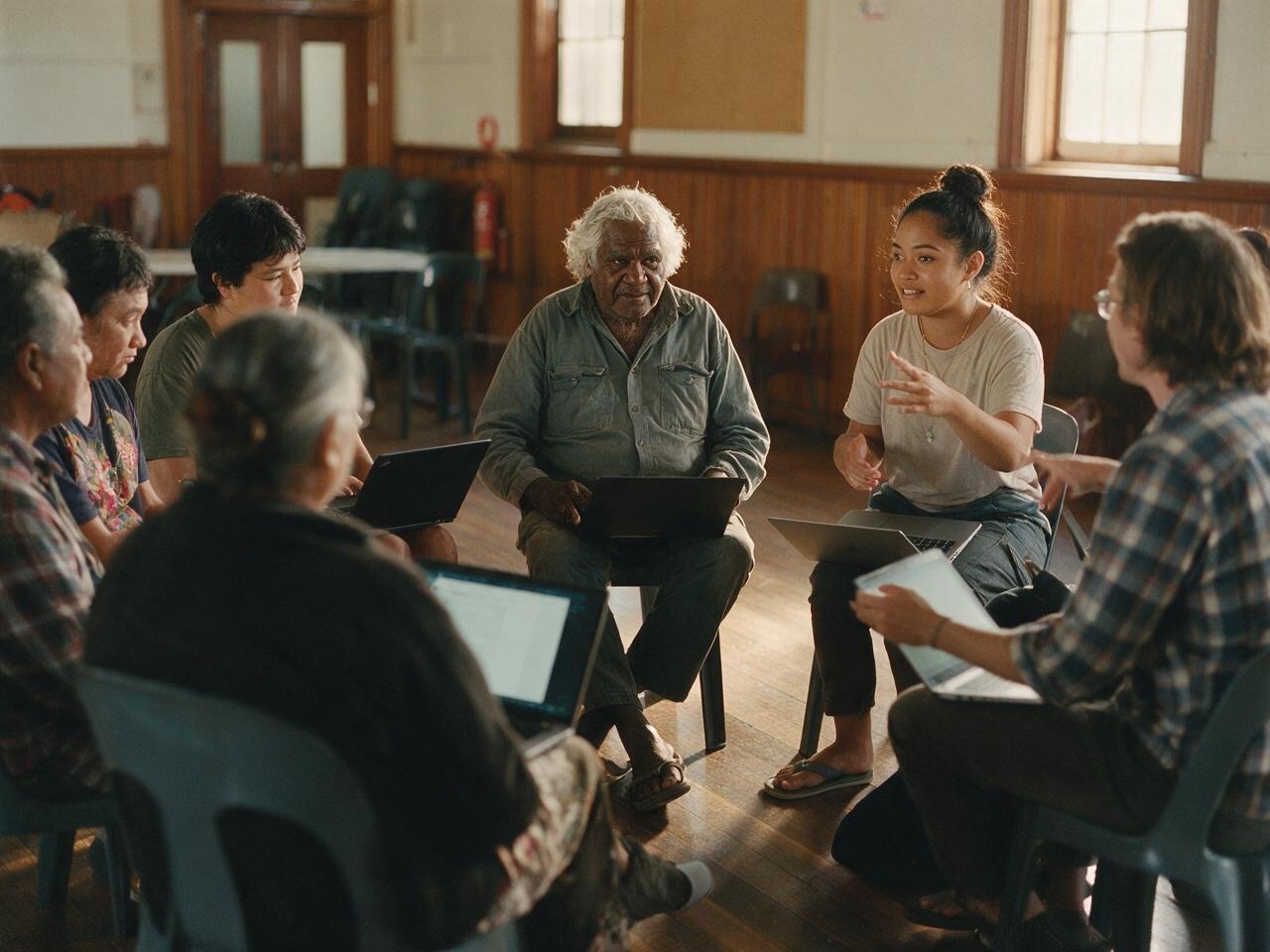
Community members in an AI awareness workshop
Could mean01

Health

AI may help clinicians organise information and support diagnosis. Any benefit in remote services needs local evidence, reliable access and clinical oversight.

Data centre in the Australian outback
Could mean02

Climate & Country

AI may help analyse environmental images and forecasting data. Its usefulness must be tested against local conditions and existing methods.

Students learning in a regional classroom
Could mean03

Learning

Tutoring and translation tools may offer extra practice. Quality varies by language, topic and learner; a fluent answer can still mislead.

City skyline at night
Could mean04

Work

AI can take a first pass at the paperwork. Whether you get that time back, or just get more paperwork, depends on the job, the checking it needs and who shares the gains.

Farmer using a drone in a wheat field
Could mean05

Food & farming

Image analysis and forecasting may help farmers make decisions. Benefits depend on the crop, equipment, data quality and cost.

Australian coastline at first light
Could mean06

Science

AI can help researchers explore candidate medicines and materials. A generated hypothesis is not a validated discovery.

A capable tool is the easy part. The benefits need people, evidence and fair decisions about who gets them.

Find your part →
Know the risks

From the scam call to the long-term stakes

AI risk isn’t one thing. Slide along the spectrum to see how the harms scale, and what helps at each step.

Present-day harmsBigger, less certain
Happening now

Scams, deepfakes & misinformation

Voice-cloned emergency calls, fake endorsement ads and AI-written phishing can be cheap to produce and difficult to spot. Verify the request independently rather than trusting its polish.

Who should consider this

Anyone who gets an urgent call or message asking for money.

What helps

Hang up and call back on a number you already have. A family safe-word is a good extra check. Banks and platforms have a job to do too.

See the harms →
Security threats

AI is making phishing, deepfake fraud and hacking cheaper. Here are the six to watch.

Explore →